How it
works
Stated precisely.
Checked in public.
Math for AI Safety is an open research organization. We state open problems whose solutions would advance AI safety, precisely enough for a mathematician outside the area to work on. Each one is paired with a theory of change: how a solution would help.
A problem is listed as open if it is open to our knowledge. It is checked against the literature when it is released, and finding an existing solution counts as resolving it.
From problem to paper.
Open problems are incorporated into agendas, and a maturing agenda spins off papers. Every document carries a permanent identifier, MAIS-O, MAIS-A or MAIS-P, which never changes even if the title does.
Taking part.
- Open an issue naming the problem, before investing serious work.
- Post partial or numerical results, labeled as such.
- A maintainer reviews it in public and records what was checked and what was not.
- Verified work is credited as printed on your write-up.
Contribution guide ↗ How to cite ↗
AI assistance.
AI coauthors are welcome. If an AI produced the argument, say so: such submissions are labeled and screened first, and every claim is still verified by a person.
Where it came from.
MAIS grew out of Lionel Levine’s survey Math for AI Safety: An Invitation for Mathematicians (arXiv:2609.15289).
Team.
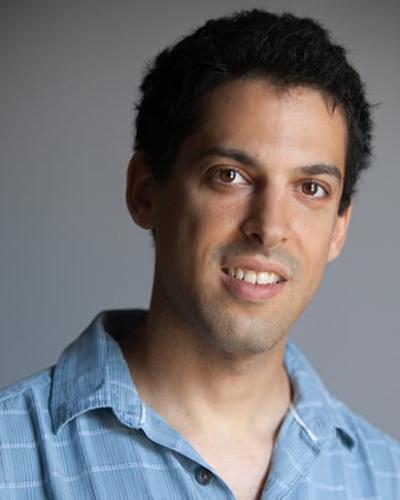 Lionel LevineProfessor of Mathematics, Cornell UniversityWebsite ↗